Habitat
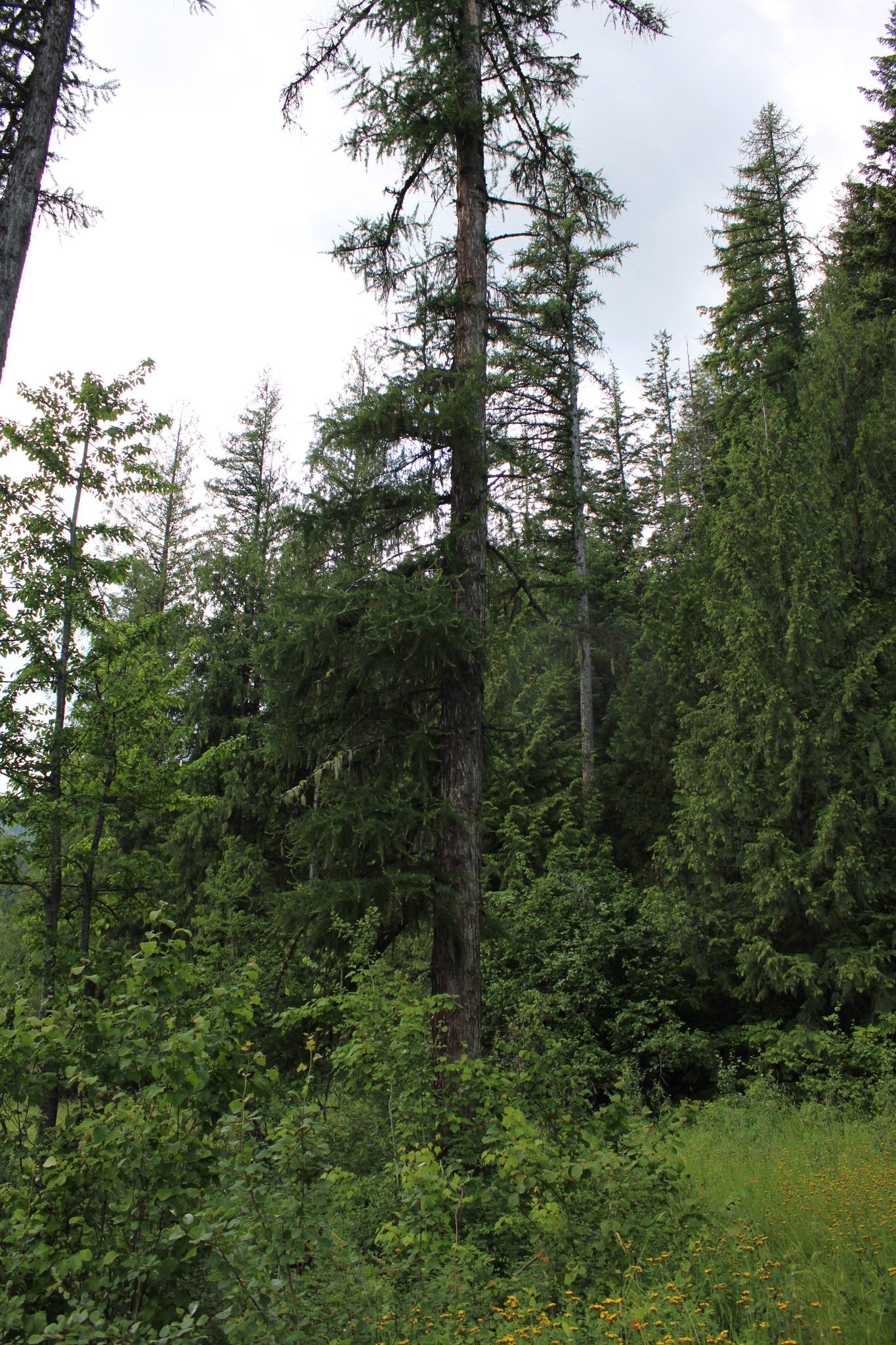
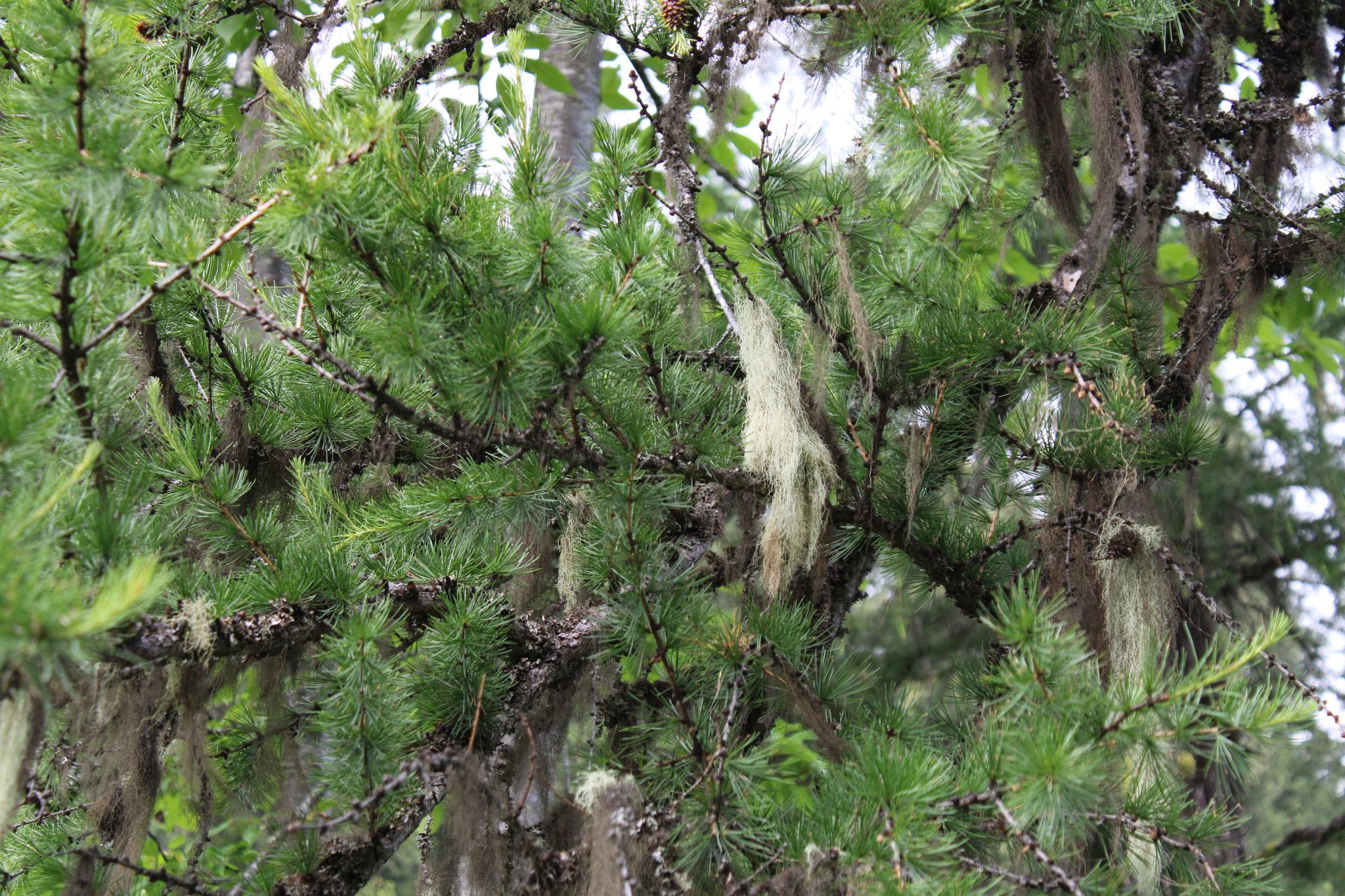
The Chambersiellidae nematode specimen was extracted from lichens growing on a Western Larch a few meters above the ground. "Nematodes in the Chambersiellidae are frequently found in association with bark beetles. The relationships are most likely phoretic, as the nematodes are transported from tree to tree or to insect galleries by the beetles."
Key Taxonomic Observations (click image to view at full size.)
Pharanx
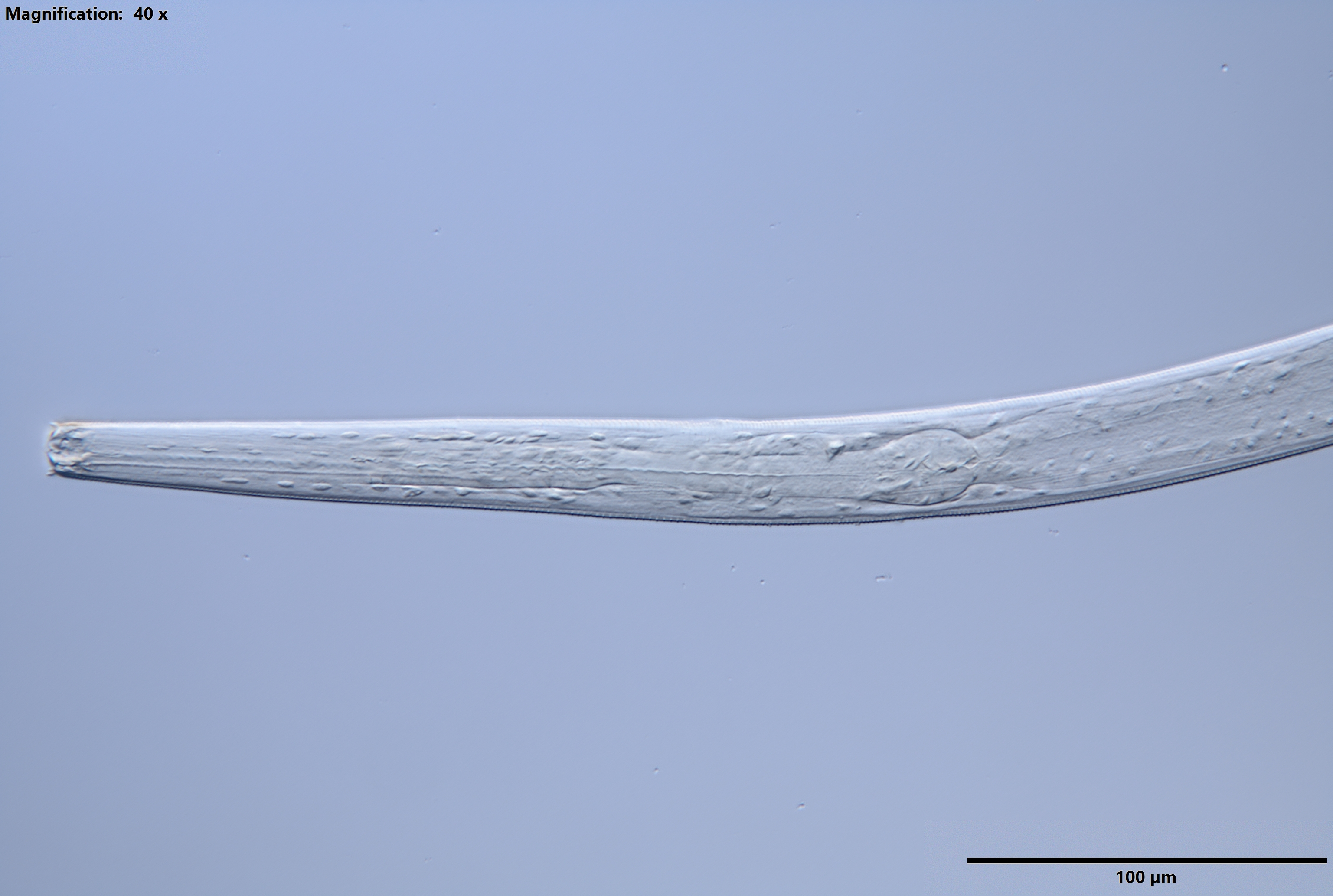
Reproductive System
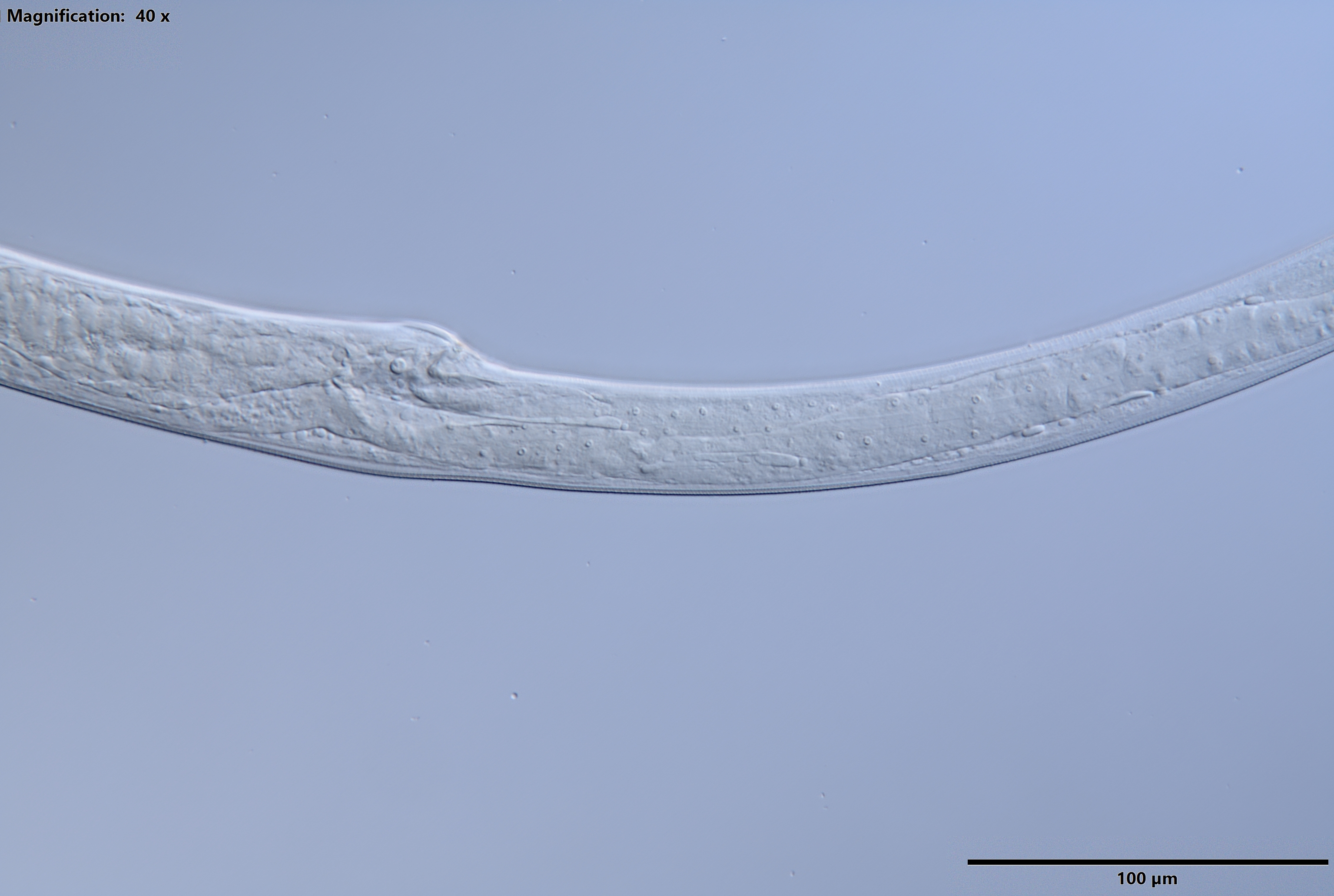
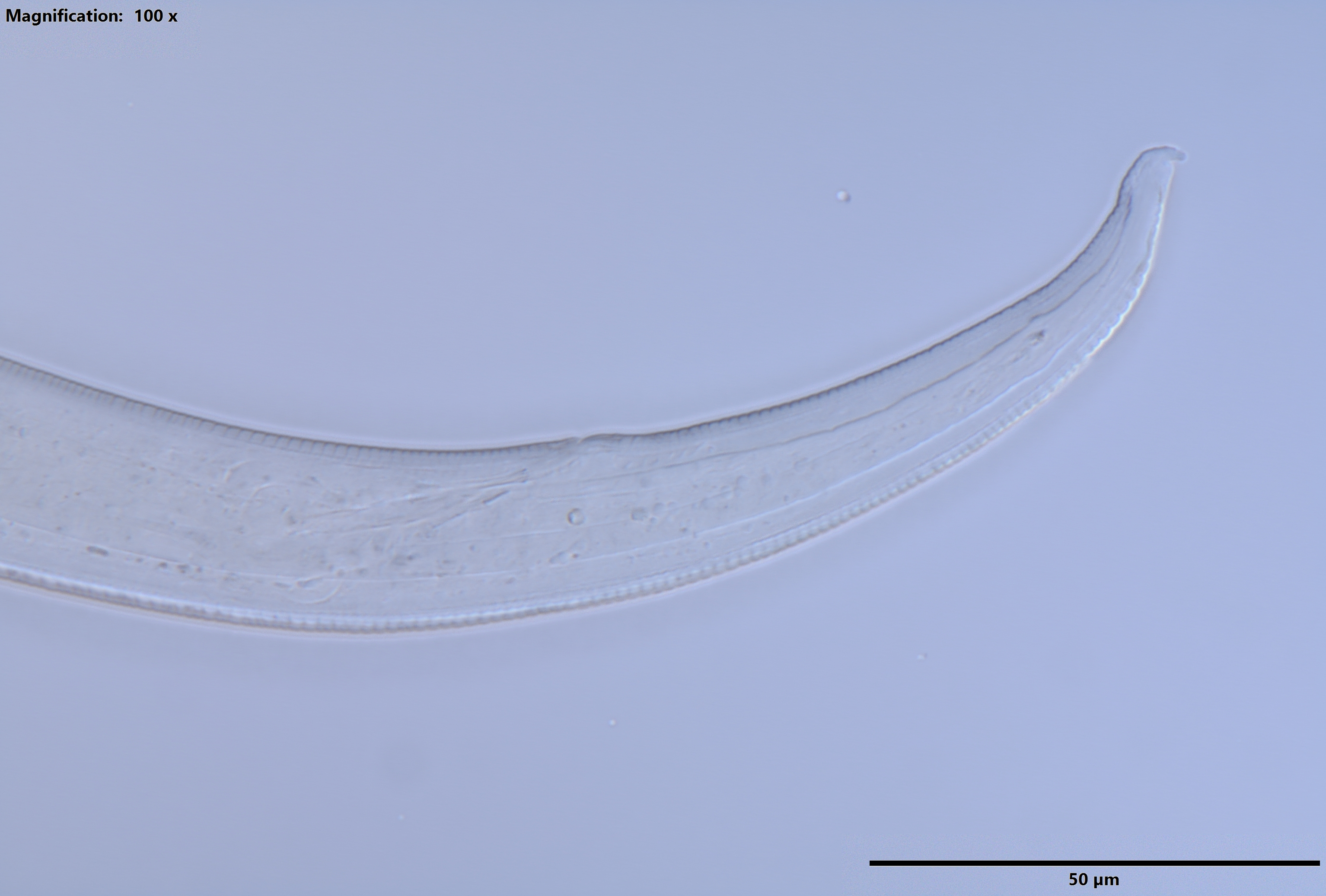
Tail (Dorsally Hooked Terminus)
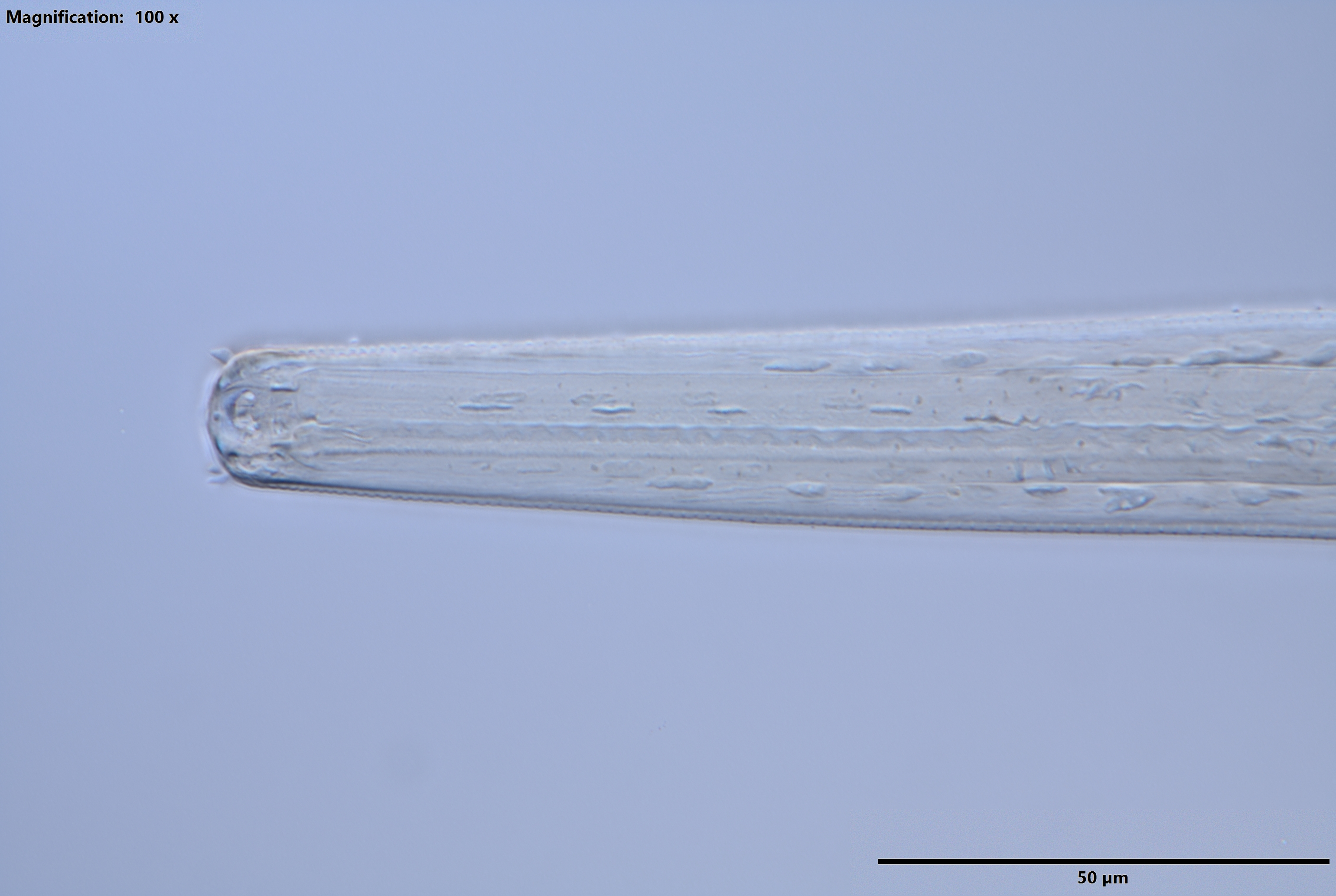
Head
Taxonomic Keys From Chromadorea, To Rhabditia To Chambersiellidae from Nemaplex
Show Me The Keys!!!
Keys for Class Chromadorea to Subclass Chromadoria to Order Rhabditida to Family Chambersiellidae
-
Class Chromadorea
- Pore-like or slit-like amphid apertures, always labial.
- Amphid apertures on lips, often difficult to see;
- No hypodermal glands; hypodermal cells are multinucleate;
- No caudal glands;
- Males with a single testis and with paired pre-anal supplements, sub ventral in 2 rows;
- Three esophageal glands
- Deirids are present in some near the nerve ring.
- Phasmids present, generally posterior.
- There are no hypodermal glands, but hypodermal cells are multinucleated.
- Excretory system tubular.
- No caudal glands.
- Males generally have a single testis.
- Caudal alae are common.
- Male with paired preanal supplement glands in two sublateral rows.
- Sensory papillae are cephalic only, although they may be caudal papillae in males.
- The esophagus varies but has three esophageal glands.
- Almost exclusively terrestrial, rarely freshwater or marine.
- Subclass Chromadoria
-
Three-part esophagus (corpus, isthmus and postcorpus), valve in postcorpus; corpus and postcorpus in 12 cells
- Order Rhabditida
- Male with rays in delicate caudal alae
- Body Structure: They typically have a cylindrical, elongated body with a smooth cuticle. Adults are usually about 1 mm long, with females slightly longer than males.
- Lips and Sensilla: They possess six lips with sensilla arranged in two concentric circles around the mouth. Small amphid pores are located at the base of the lateral lips.
- Feeding Apparatus: The stoma (mouth opening) is tube-like with a prismatic cross-section. It includes a short cheilostom, a gymnostom, and a stegostom enveloped by pharyngeal tissue. The pharynx is muscular and tripartite, with a terminal bulb containing rhabditoid valves to crush bacteria.
- Reproductive Structures: Females have paired, opposed, reflexed ovaries, and the vulva is median. The male tail can vary in shape, often leptoderan or peloderan, with separate spicules.
-
Ecological Roles: Rhabditida nematodes can be free-living, zooparasitic, or phytoparasitic. They play critical ecological roles as primary consumers, feeding on bacteria and organic matter in soil.
-
Family Chambersiellidae
- Three-part esophagus (corpus, isthmus and postcorpus in 12 cells),
- Valve in postcorpus
- Corpus and postcorpus comprise 12 cells
- Cuticle finely striated with two lateral incisures.
- Lip region with six cephalic cirri (elaborate cephalic appendages) and 6-10 cephalic papillae.
- Anteriormost rhabdions of the stoma modified to form hooklike structures are distinct from the rest.
- The posterior part of the stoma forms a narrow vaselike glottid apparatus and is surrounded by tissue which is differentiated from that of the esophagus.
- Amphids opening behind the anterior broad chamber of the stoma;.
- Esophagus without a median bulb but with a valvulated terminal bulb.
- Monovarial.
- Vulva is slightly pre-equatorial to post-equatorial.
- Testis single.
- Male tail with several pairs of caudal papillae;
- Spicules paired and not joined; gubernaculum present;
- Rectal glands present;
- The tail of both sexes has a dorsally hooked terminus.
-
Family Chambersiellidae
Consider (Species from World Register of Marine Species (WoRMS))
- Chambersiella backeri Sanwal, 1957 accepted as Geraldius backeri (Sanwal, 1957) Sanwal, 1971
- Chambersiella papillata (Rahm, 1928) Sanval, 1960 accepted as Diastolaimus papillatus Rahm, 1928
- Chambersiella rodens Cobb, 1920
- Cornilaimus furcillus Truskova &Eroshenko, 1977
- Diastolaimus aculeatus (Daday, 1905) Andrássy, 1984
- Diastolaimus croca (Massey, 1963) Andrássy, 1984
- Diastolaimus damalis (Massey, 1966) Andrássy, 1984
- Diastolaimus grossus (Truskova &Eroshenko, 1977) Andrássy, 1984
- Diastolaimus papillatus Rahm, 1928
- Fescia grossa Truskova &Eroshenko, 1977 accepted as Diastolaimus grossus (Truskova &Eroshenko, 1977) Andrássy, 1984
- Geraldius backeri (Sanwal, 1957) Sanwal, 1971
- Macrolaimus aculeatus (Daday, 1905) Thorne, 1937 accepted as Diastolaimus aculeatus (Daday, 1905) Andrássy, 1984
- Macrolaimus arboreus Truskova &Eroshenko, 1977
- Macrolaimus canadensis Sanwal, 1960
- Macrolaimus citri Rahm, 1928 (uncertain >taxon inquirendum)
- Macrolaimus crucis Maupas, 1900
- Macrolaimus crucis sensu Fuchs, 1938 accepted as Macrolaimus canadensis Sanwal, 1960
- Macrolaimus crucis sensu Meyl, 1960 accepted as Macrolaimus ruehmi Andrássy, 1960
- Macrolaimus crucis sensu Rühm, 1956 accepted as Macrolaimus ruehmi Andrássy, 1960
- Macrolaimus crucis gracilis Rahm, 1928 (uncertain >taxon inquirendum)
- Macrolaimus crucis tenuis Rahm, 1928 (uncertain >taxon inquirendum)
- Macrolaimus hamatus Thorne, 1937
- Macrolaimus maipoensis (Rahm, 1932) Andrássy, 1978 accepted as Seleneella maipoensis Rahm, 1932
- Macrolaimus natator Timm, 1960
- Macrolaimus papillatus (Rahm, 1928) Goodey, 1951 accepted as Diastolaimus papillatus Rahm, 1928
- Macrolaimus richteri Swart &Heyns, 1992
- Macrolaimus ruehmi Andrássy, 1960
- Macrolaimus somniorum Andrássy, 1984
- Macrolaimus taurus Thorne, 1937
- Santafea croca Massey, 1963 accepted as Diastolaimus croca (Massey, 1963) Andrássy, 1984
- Santafea damalis Massey, 1966 accepted as Diastolaimus damalis (Massey, 1966) Andrássy, 1984
- Seleneella gracilis (Rahm, 1929) Rahm, 1932 accepted as Macrolaimus crucis gracilis Rahm, 1928
- Seleneella maipoensis Rahm, 1932 (uncertain >taxon inquirendum)